The Evolution of Fuel Payment Systems
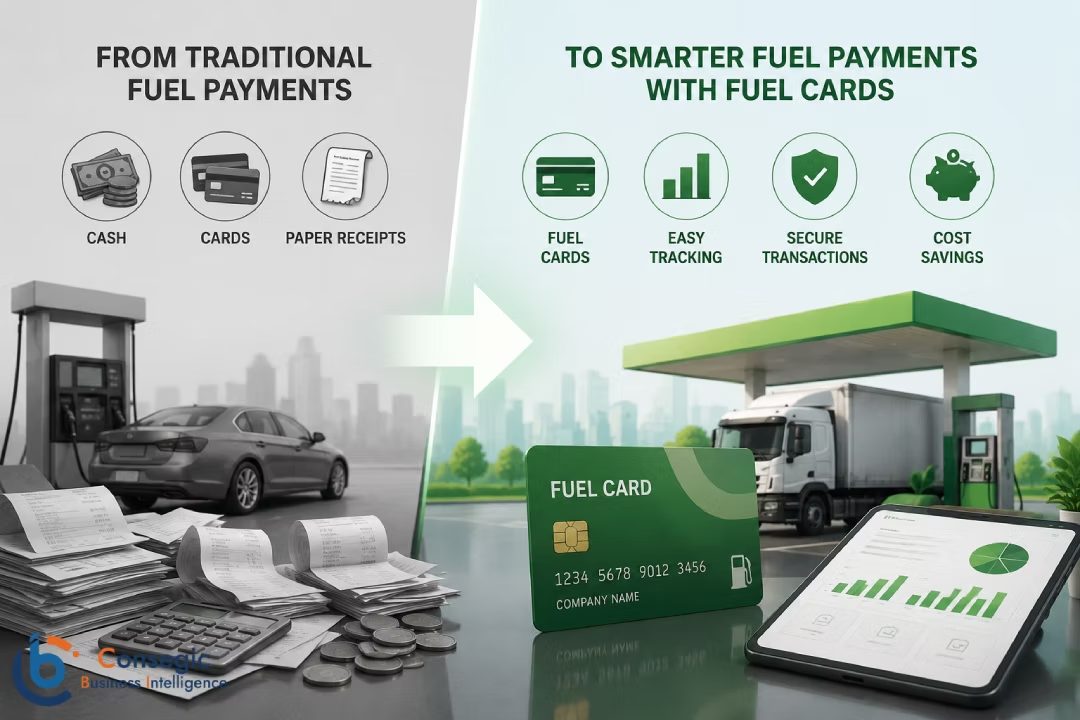
Traditionally, there were only three ways of paying for the fuel: cash payments, credit cards, and debit cards, along with paper receipts for individual drivers or organizations owning vehicle fleets. These methods are still widely popular today, but they usually present numerous problems concerning the tracking of transactions, expense management, security, and administrative effort. With growing demands for the optimization of processes and financial management, there appeared a way that is more structured than traditional ways of making fuel payments.
There is a special type of plastic cards, which are designed for making payments for fuels and, depending on providers, can be used not only for fuel but for some other expenses connected with vehicles as well. The main advantage of using fuel cards is the ability of business owners to get the transaction data in the form of reports that allow tracking the fuel consumption.
Additionally, the trend is reinforced by the process of digitization in transportation and logistics. Nowadays, the fuel card can be integrated with the fleet management software and mobile apps as well as with accounting software. In light of rising fuel prices, fuel cards become more popular among the businesses.
Growing Demand for Convenient and Cashless Fuel Payments
A significant contributor towards the increased popularity of fuel cards includes the need for convenience and cashless payment options. Payments of fuel through conventional means tend to involve the use of employees' cash or payment cards and submission of receipts later. This can be tedious, since employees might have trouble submitting accurate receipts in the stipulated time.
On the other hand, fuel cards provide an efficient alternative by enabling authorized individuals to make payments directly using the card. In addition, many providers of fuel cards offer mobile apps and websites which enable customers to view their transaction records. This eliminates the need to submit receipts, thus making expenses easier to manage.
There has also been the increased adoption of cashless payment systems owing to the general comfort level that people have developed when it comes to digital financial transactions. Fuel cards, on the other hand, are designed not only to facilitate payment but also to control and report fuel expenses.
For firms that run several cars, this will help make their work easier. Due to this reason, the rising trend of paying through digital channels is assisting in making these fuel cards more preferable than traditional methods of fuel purchase.
How Fuel Cards Improve Fleet Management and Expense Control?
It is becoming more complicated to manage the costs associated with fuel as the number of vehicles in a company increases. Traditional approaches require manual collection of receipts, analysis of every transaction, verification of reimbursements, and the identification of suspicious spending. The use of fuel cards can solve many of these problems due to the centralization of fuel transactions.
It is possible to control fuel expenses using different aspects of fuel cards provided by various service providers. In particular, one can set up the transaction limit, specify where purchases can be made, and even limit the types of products that can be bought.
The detailed information about each transaction can provide more visibility into how the fuel is consumed. Comparing the amount of fuel and miles covered and used vehicles is helpful when it comes to the identification of inefficient use or fraud.
It is also important to note that centralizing all fuel transactions can simplify the process of accounting for the money spent on fuel. Instead of having to analyze and report many individual transactions, companies can have a single document containing all the necessary information.
The Role of Technology in Transforming Fuel Purchases
The technology revolution has also transformed how business purchases fuels as fuel cards become more advanced compared to regular payment means. The new generation fuel card systems have been incorporating more advanced features such as digitization, mobile applications, data analysis, GPS tracking, and integration with fleet management to provide businesses with better management of their fuel-related transactions.
While the old system was only capable of being used for payments, the connected fuel card system can offer a lot of data on transactions and vehicle usage. Fleet managers will be able to see the location of purchase, fuel quantities, the time of transactions, and other relevant transactional data using the online dashboard. There are some fuel card systems that can integrate data with fleet management and accounting software in order to minimize manual data entry processes.
The advanced systems can also utilize alerts and analysis in order to detect any abnormality in transactions. For instance, a transaction at unauthorized locations and above predefined spending limit can automatically trigger an alert.
Why Businesses Are Moving Toward Fuel Cards for Greater Efficiency?
Businesses have realized that fuel cards not only make it easier to pay but also provide greater financial control and increase efficiency. In the case of companies involved in transport and logistics, fuel serves as a significant ongoing expense. That is why even the smallest improvement in the sphere of managing fuel can produce some significant savings.
One of the major advantages that come with this is the possibility of centralizing fuel transactions. Instead of handling fuel payments using several methods and manually processing receipts, it becomes possible for enterprises to manage their finances using specialized fuel card systems which can simplify processes and offer managers better insight into total fuel costs.
Fuel cards can be used to ensure better control and accountability. Cards can be assigned to particular vehicles or drivers and customized spending limits set. The transaction history will make it easy for the manager to track the use of fuel and pinpoint any cases where the fuel may have been misused. Such mechanisms become very useful for organizations running large fleets.
Moreover, fuel cards become an excellent tool for decision making based on data. Transaction data from the past can help the enterprise analyse fuel consumption and find ways to enhance budgeting and optimize the use of fuel. In a world where digitalization and cost optimization are top priorities for companies, this becomes increasingly relevant.
Conclusion
From the traditional payments method for fuelling up vehicles to the fuel card system, this change is brought about by the increasing demand for convenience, efficient cost management, higher security levels, and efficiency in operations. The fuel card simplifies the process as well as ensuring that the company gets to benefit from having all the transaction details in one place. With the introduction of the mobile application, fleet management software, GPS tracking, and data analysis systems, the relevance of the fuel cards has been improved even more. In the face of continually rising fuel costs which impact the operating costs, the need for effective management and tracking of fuel usage is getting even more vital.