Jump to Content
Boutique Salt Market - Size, Share, Industry Trends, and Forecasts (2025-2032)
Boutique Salt Market Size:
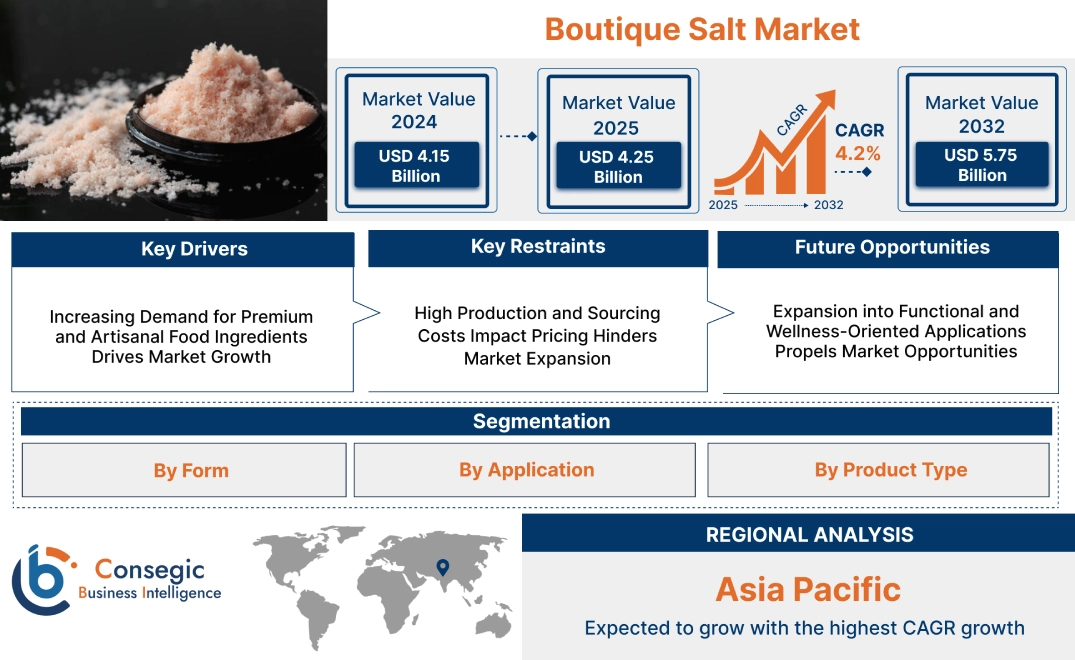
Boutique Salt Market size is estimated to reach over USD 5.75 Billion by 2032 from a value of USD 4.15 Billion in 2024 and is projected to grow by USD 4.25 Billion in 2025, growing at a CAGR of 4.2% from 2025 to 2032.
Boutique Salt Market Scope & Overview:
Boutique salt refers to premium, artisanal salts which undergo minimal processing and are often sourced from unique geographical locations. These salts are valued for their distinct mineral compositions, textures, and flavor profiles, making them a preferred choice in gourmet cooking and specialty food applications. They are available in various forms, including Himalayan pink salt, sea salt, fleur de sel, and smoked salt, each offering unique culinary and aesthetic appeal.
Key features include natural mineral enrichment, varied crystal structures, and distinct flavor enhancements. These salts provide depth to dishes, enhance food presentation, and cater to health-conscious consumers seeking alternatives to refined table salt. Some variants also offer trace elements that contribute to overall well-being.
Culinary professionals, specialty food brands, and wellness-focused consumers favor them for their premium quality and versatility. Ongoing innovations in packaging and flavor infusions continue to expand its applications in gourmet cuisine and high-end food products.
Boutique Salt Market Dynamics - (DRO):
Key Drivers:
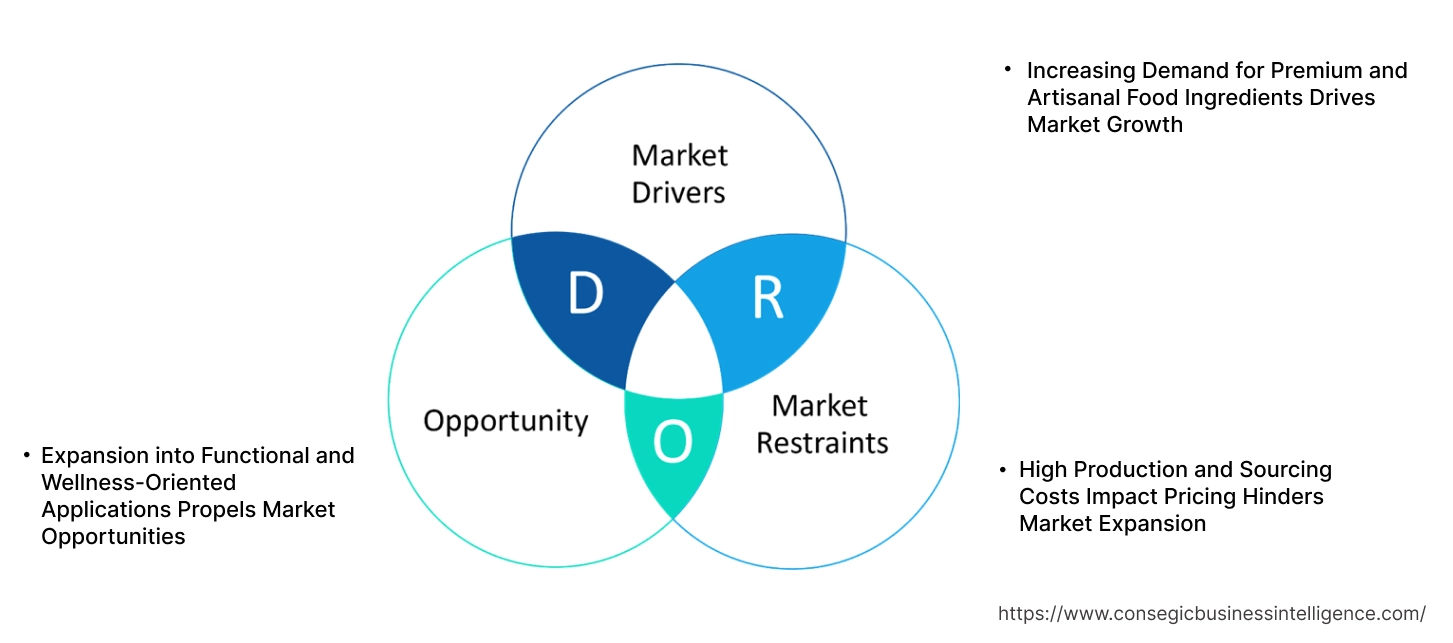
Increasing Demand for Premium and Artisanal Food Ingredients Drives Market Growth
Consumers are shifting toward hand-harvested, mineral-rich salts that offer enhanced flavors, textures, and health benefits compared to traditional table salt. The growth of gourmet dining, organic food trends, and home cooking with high-quality ingredients is driving increased interest in Himalayan pink salt, fleur de sel, and smoked sea salt. Chefs and food enthusiasts seek natural, unrefined salts for their unique mineral composition and distinct taste profiles, making them a preferred choice in fine dining and specialty food markets. Additionally, the expansion of online gourmet food platforms and specialty retailers is increasing consumer accessibility to rare and exotic salt varieties. As awareness of culinary craftsmanship and natural food sourcing grows, the market is poised for continued expansion. These factors are expected to drive boutique salt market expansion, reinforcing its role as a premium culinary essential.
Key Restraints:
High Production and Sourcing Costs Impact Pricing Hinders Market Expansion
Many varieties require labor-intensive harvesting methods, solar evaporation techniques, and hand-extraction from remote regions, contributing to higher operational expenses. Additionally, transportation costs for importing salts from specific geographic locations, such as French sea salt beds or Himalayan salt mines, further elevate retail prices. The premium positioning of these salts limits accessibility for price-sensitive consumers, as mass-market table salts are significantly more affordable. Competition from cheaper, refined salt alternatives also affects consumer purchasing decisions, slowing widespread adoption. Producers must invest in efficient logistics, local sourcing alternatives, and scalable production processes to remain competitive while maintaining quality standards. Overcoming these cost-related challenges is crucial for ensuring boutique salt market growth, allowing broader market reach without compromising product integrity.
Future Opportunities:
Expansion into Functional and Wellness-Oriented Applications Propels Market Opportunities
Consumers are seeking natural, mineral-rich salts that offer hydration support, detoxification, and therapeutic benefits, leading to increased use in bath salts, skincare, and electrolyte-enhanced beverages. The wellness industry is integrating these salts into spa treatments, body scrubs, and relaxation therapies, leveraging their trace minerals for skin nourishment and circulation support. Additionally, the growth of sports hydration and electrolyte replenishment is driving innovation in sodium-balanced beverages and health supplements that incorporate specialty salts. As holistic health trends gain momentum, brands are developing functional formulations infused with botanicals, adaptogens, and immune-boosting ingredients to appeal to health-conscious consumers.
- For instance, in December 2024, students of Kindai University in Japan collaborated with Guam-based companies to create a new “Made in Guam” bath salt product.
These advancements are expected to unlock new boutique salt market opportunities, positioning specialty salts as essential wellness products with multifunctional benefits.
Boutique Salt Market Segmental Analysis :
By Form:
By form, the market is divided into powder and crystalline.
The crystalline segment held the largest boutique salt market share in 2024.
- Crystalline salts, such as Himalayan pink salt, fleur de sel, and Celtic sea salt, are widely preferred for their texture, mineral content, and premium appeal.
- The need for high-quality gourmet salts is rising among culinary enthusiasts, restaurants, and food processors, contributing to market expansion.
- Segmental analysis indicates that crystalline salts maintain their structural integrity, making them ideal for specialty cooking and finishing applications.
- Boutique salt market trends suggest that increasing consumer interest in artisanal and mineral-rich salts is driving the demand for crystalline varieties.
The powder segment is expected to experience the fastest CAGR during the forecast period.
- The powdered form is increasingly used in cosmetic formulations, therapeutic applications, and processed food products.
- The need for fine-ground boutique salts is rising in organic skincare, bath salts, and natural health remedies.
- Segmental trends indicate that the popularity of powdered variants in holistic wellness and spa treatments is boosting sales.
- With innovation in fine-textured seasoning blends, this segment is expected to contribute to boutique salt market growth.
By Application:
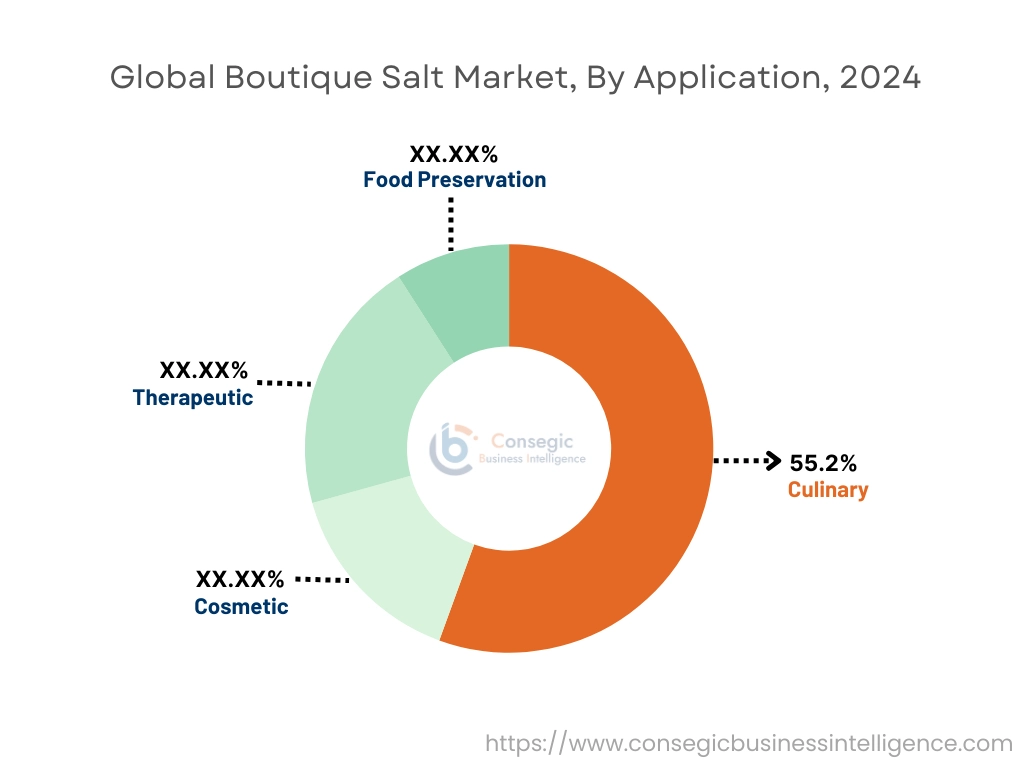
Based on application, the market is segmented into culinary, cosmetic, therapeutic, and food preservation.
The culinary segment held the largest share of 55.2% in 2024.
- They are widely used in gourmet cooking, fine dining, and home kitchens, due to their unique textures and flavors.
- The need for specialty salts in premium restaurant chains and organic food markets is driving sales in the culinary sector.
- Boutique salt market analysis suggests that increasing consumer awareness of the health benefits of mineral-rich salts is strengthening the culinary segment.
- Market trends highlight a growing preference for natural, unprocessed salts in artisanal cooking and specialty food products.
The therapeutic segment is expected to have the fastest CAGR during the forecast period.
- Boutique salts, such as Himalayan pink salt and Dead Sea salt, are widely used in holistic wellness treatments, spa therapies, and respiratory therapies.
- The need for mineral-rich salts in bath soaks and detoxification treatments is rising among wellness-conscious consumers.
- Segmental trends indicate a surge in spa and personal care brands incorporating them into their product lines.
- With increasing interest in natural remedies, the therapeutic segment is contributing to boutique salt market expansion.
By Product Type:
By product type, the market is segmented into Himalayan pink salt, fleur de sel, black salt (kala namak, hawaiian black lava salt), flake salt, smoked salt, celtic sea salt, persian blue salt, and others (red salt, bamboo salt, etc.).
The Himalayan pink salt segment held the largest boutique salt market share in 2024.
- Himalayan pink salt is highly valued for its mineral content, aesthetic appeal, and versatile use in culinary, therapeutic, and cosmetic applications.
- The need for Himalayan pink salt continues to grow, particularly in organic food markets and holistic wellness industries.
- Boutique salt market analysis indicates that its perceived health benefits and premium positioning contribute to its dominance in the market.
- Segmental trends suggest that increasing consumer preference for natural, unrefined salts is driving growth in this segment.
The black salt segment is anticipated to have the fastest CAGR during the forecast period.
- Black salt varieties, including Kala Namak and Hawaiian Black Lava Salt, are gaining popularity due to their distinctive taste and health benefits.
- The need for unique, regionally sourced salts in global cuisine is fueling interest in black salts.
- Boutique salt market trends indicate increasing use of black salts in vegan and Ayurvedic diets, contributing to their rising popularity.
- In December 2024, Goyal Salt Limited, a leading salt FMCG player, launched a new product, “Goyal Black Salt”, expanding its product portfolio. This provides a wholesome and beneficial option to consumers.
- With expanding applications in health-focused food products, this segment is expected to drive market growth.
Regional Analysis:
The regions covered are North America, Europe, Asia Pacific, the Middle East and Africa, and Latin America.
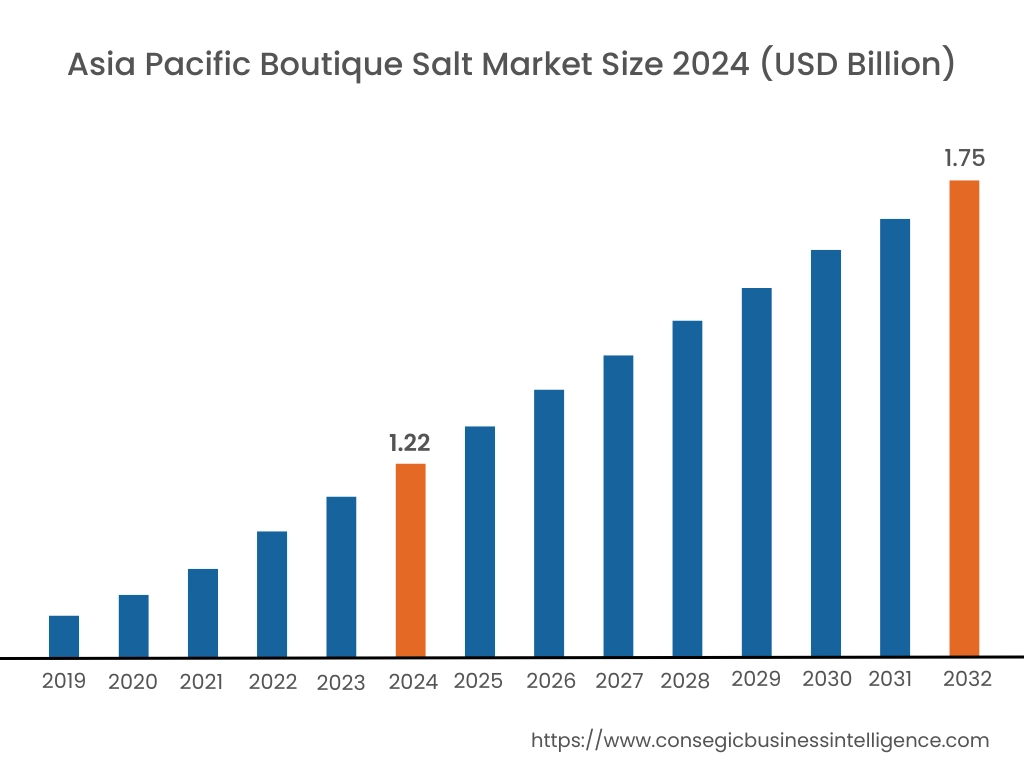
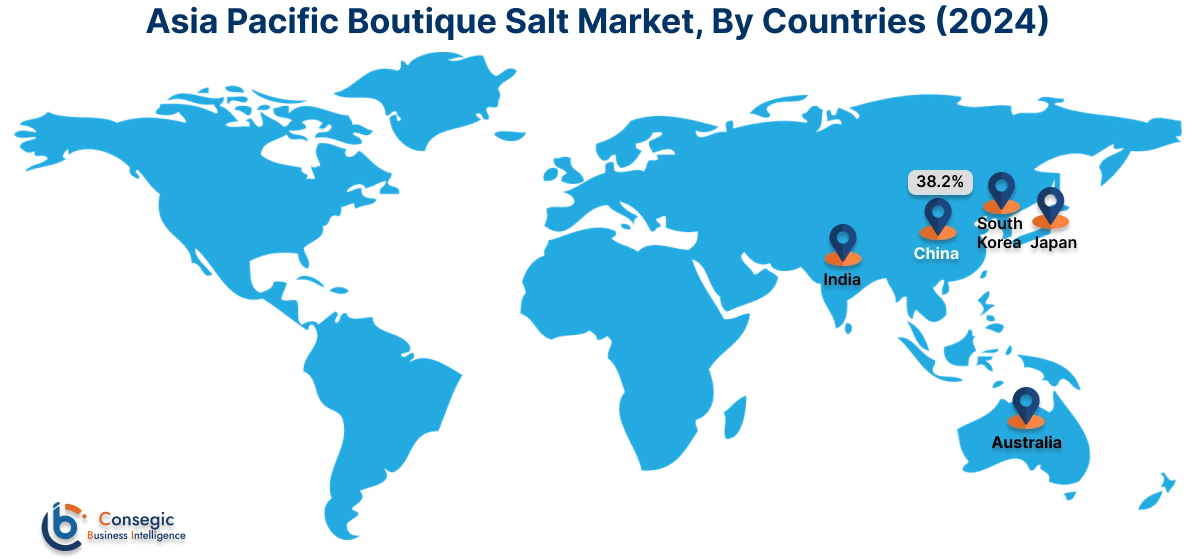
Asia-Pacific region was valued at USD 1.22 Billion in 2024. Moreover, it is projected to grow by USD 1.25 Billion in 2025 and reach over USD 1.75 Billion by 2032. Out of this, China accounted for the maximum revenue share of 38.2%. The Asia-Pacific region is experiencing rapid increase in the boutique salt market, primarily driven by increasing urbanization, rising disposable incomes, and a growing appetite for premium and organic food products. Countries like China, India, and Japan are investing heavily in developing the market, with increasing numbers of consumers becoming aware of the health benefits of natural salts. Japanese consumers have a long-standing preference for high-quality ingredients in their food, making them a key market for sea salt and Himalayan pink salt. Companies like Himalayan Chef and K&K are gaining regional traction by offering premium salt products. In addition, many governments in the Asia-Pacific region have implemented policies encouraging the rise of the organic food sector, which indirectly supports the demand for natural ingredients such as boutique salts. For example, India’s National Policy on Organic Farming aims to promote organic products, including organic salts, in domestic and international markets.
North America is estimated to reach over USD 1.86 Billion by 2032 from a value of USD 1.38 Billion in 2024 and is projected to grow by USD 1.41 Billion in 2025. North America holds a dominant position in the boutique salt industry, accounting for a significant share of the global market. The boutique salt market demand is driven by consumer needs for premium, natural, and organic food in countries like the U.S. and Canada. The region's preference for artisanal and high-quality ingredients, especially in the food industry, has made them a staple in professional kitchens and households. Furthermore, North American governments have supported the growth of this industry through initiatives promoting natural and sustainable food production. For example, the U.S. Department of Agriculture (USDA) encourages sustainable farming and food production methods, indirectly benefiting the growth of natural ingredient markets such as gourmet salt.
Europe is an established market for boutique salts, with countries like France, Spain, and Italy leading the demand due to their rich culinary traditions and preference for high-quality ingredients. The rising consumer interest in health, wellness, and organic food products drives the European market. As European consumers increasingly seek out gourmet ingredients, boutique salts are increasingly used, especially in premium food products. Countries like France are known for their gourmet food culture, and there is a growing demand for salts such as fleur de sel and sea salt. The European market also benefits from a significant amount of local production of specialty salts, contributing to a steady supply and further increasing market availability. Additionally, European Union policies focusing on protecting and promoting regional food products have indirectly benefited the market. For instance, the Protected Designation of Origin (PDO) status for salt products like Fleur de Sel enhances the value and marketability of these salts, encouraging consumers to purchase high-quality, locally-produced products.
Latin America's boutique salt market is gradually gaining traction, influenced by a growing middle class and increasing disposable incomes. Countries such as Brazil and Mexico are exploring the introduction of premium salt products to cater to health-conscious consumers. The region's abundant natural resources present opportunities for local production, potentially reducing costs and appealing to environmentally conscious consumers. As awareness of the benefits of mineral-rich salts spreads, the market is poised to experience steady expansion, offering opportunities for both local and international stakeholders.
The Middle East and Africa are emerging markets for boutique salts, with growth potential linked to increasing urbanization and demand for premium lifestyle products. The arid climate in many parts of these regions necessitates reliable sources of minerals, and consumers are becoming more inclined towards products that offer additional health benefits. While challenges such as limited awareness and higher price points persist, the market offers a promising landscape for expansion, especially as economic development continues, and consumer preferences evolve.
Top Key Players & Market Share Insights:
The boutique salt market is highly competitive with major players providing products and services to the national and international markets. Key players are adopting several strategies in research and development (R&D), product innovation, and end-user launches to hold a strong position in the global boutique salt market. Key players in the boutique salt industry include -
- Maldon Crystal Salt Co. (UK)
- Falksalt (Sweden)
- Nouryon (Netherlands)
- Cargill, Incorporated (USA)
- SaltWorks, Inc. (USA)
- Halen Môn (UK)
- Sal de Ibiza (Spain)
- K+S Aktiengesellschaft (Germany)
- Tata Chemicals (India)
- Zoutman (Belgium)
Recent Industry Developments :
Product Launches:
- In April 2024, Walmart launched bettergoods, a new private brand making elevated culinary experiences accessible for all. This line contains specialty salts, seasoning and plant-based items along with gluten and antibiotic-free goods at affordable prices.
Partnerships:
- In November 2024, Salt Oral Care formed a strategic partnership with World Trade Centre Pune for retail expansion.
Boutique Salt Market Report Insights:
| Report Attributes | Report Details |
| Study Timeline | 2019-2032 |
| Market Size in 2032 | USD 5.75 Billion |
| CAGR (2025-2032) | 4.2% |
| By Form |
|
| By Application |
|
| By Product Type |
|
| By Region |
|
| Key Players |
|
| North America | U.S. Canada Mexico |
| Europe | U.K. Germany France Spain Italy Russia Benelux Rest of Europe |
| APAC | China South Korea Japan India Australia ASEAN Rest of Asia-Pacific |
| Middle East and Africa | GCC Turkey South Africa Rest of MEA |
| LATAM | Brazil Argentina Chile Rest of LATAM |
| Report Coverage |
|
Key Questions Answered in the Report
How big is the Boutique Salt Market? −
Boutique Salt Market size is estimated to reach over USD 5.75 Billion by 2032 from a value of USD 4.15 Billion in 2024 and is projected to grow by USD 4.25 Billion in 2025, growing at a CAGR of 4.2% from 2025 to 2032.
What specific segmentation details are covered in the Boutique Salt Market report? +
The Boutique Salt market report includes specific segmentation details for form, product type and applications.
Which is the fastest-growing region in the Boutique Salt Market? +
Asia Pacific is the fastest-growing region in the Boutique Salt market. These trends are encouraged by increasing urbanization, rising disposable incomes, and a growing appetite for premium and organic food products.
Who are the major players in the Boutique Salt Market? +
The key participants in the Boutique Salt market are Maldon Crystal Salt Co. (UK), Falksalt (Sweden), Halen Môn (UK), Sal de Ibiza (Spain), K+S Aktiengesellschaft (Germany), Tata Chemicals (India), Zoutman (Belgium), Nouryon (Netherlands), Cargill, Incorporated (USA) and SaltWorks, Inc. (USA).
Overview
Reputation & Certifications


Our Services
- Market Intelligence & Forecasting
- Custom Research Solutions
- Market Entry Strategy
- Competitive Intelligence
- Customer Insights
- Industry Innovation Analysis
- Investment Advisory