Jump to Content
Safflower Seeds Market - Size, Share, Industry Trends, and Forecasts (2025-2032)
Safflower Seeds Market Size:
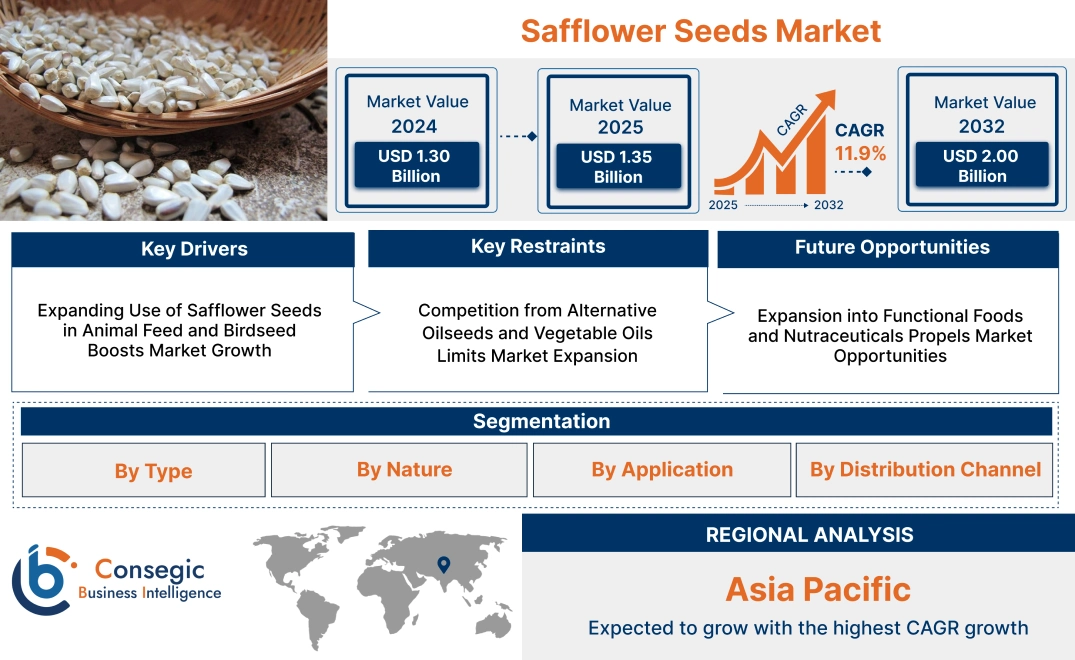
Safflower Seeds Market size is estimated to reach over USD 2.00 Billion by 2032 from a value of USD 1.30 Billion in 2024 and is projected to grow by USD 1.35 Billion in 2025, growing at a CAGR of 5.6% from 2025 to 2032.
Safflower Seeds Market Scope & Overview:
Safflower seeds are obtained from the safflower plant and are primarily used for oil extraction, animal feed, and culinary applications. They contain high levels of unsaturated fats, particularly linoleic and oleic acids, making them valuable in the production of edible oils and nutritional supplements. The seeds are also utilized in bird feed formulations and as an ingredient in health-conscious food products.
Key features include high oil content, rich antioxidant properties, and compatibility with various processing techniques. Their mild flavor and stability enhance their use in cooking and food manufacturing, while the extracted oil is known for its light texture and high smoke point. Additionally, they serve as a source of protein and essential fatty acids, supporting dietary and agricultural applications.
Food manufacturers, livestock producers, and the personal care industry incorporate them into products that prioritize nutrition and functionality. Advances in processing techniques continue to enhance their efficiency and application versatility across multiple industries.
Safflower Seeds Market Dynamics - (DRO) :
Key Drivers:
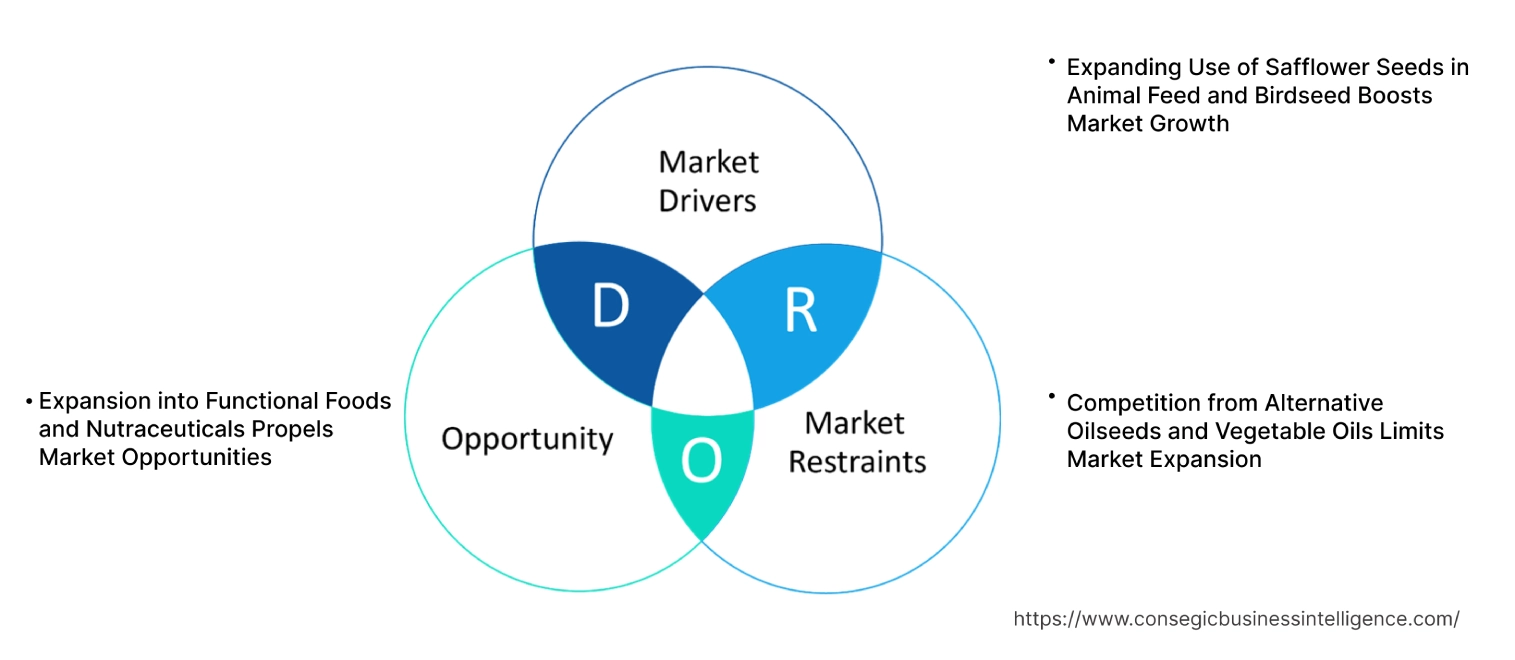
Expanding Use of Safflower Seeds in Animal Feed and Birdseed Boosts Market Growth
Rich in proteins, healthy fats, and essential nutrients, safflower seeds are a valuable component in poultry, livestock, and exotic bird diets. Bird enthusiasts prefer them due to their hard shell, which deters squirrels and other pests while attracting cardinals, finches, and other desirable bird species. In the livestock sector, they are incorporated into organic and chemical-free feed blends, aligning with the growing preference for natural and sustainable animal nutrition. The shift toward premium-quality feed and high-performance nutrition solutions in commercial farming is further strengthening demand.
- In July 2024, Moolec signed an offtake agreement with a major global CPG company for the use of their patented science-based GLA Safflower Oil product, GLASO™. This agreement has a duration of three years and established commercial conditions for the delivery of GLASO™ for the addition to various diets in the form of a dietary supplement, functional food, cosmetics, and animal nutrition such as pet food in US territory with an initial estimated volume of 50 tons for 2025.
As consumer interest in wild bird feeding and sustainable livestock feed options increases, these factors are expected to contribute significantly to safflower seeds market expansion, reinforcing their role as a versatile and high-value agricultural commodity.
Key Restraints:
Competition from Alternative Oilseeds and Vegetable Oils Limits Market Expansion
More dominant oilseeds such as sunflower, soybean, and canola are preferred by food manufacturers and industrial users due to higher production volumes, lower costs, and established supply chains. Consumers often choose these alternatives for cooking, processed foods, and personal care products, reducing the overall market penetration of safflower-based oils. Additionally, major food and cosmetic brands focus on high-yield oilseeds that offer greater profitability, limiting investment in safflower oil extraction. In the animal feed sector, other protein-rich oilseeds provide similar nutritional benefits at a lower price, leading many producers to opt for substitutes. As these alternative oilseeds continue to dominate global markets, overcoming these competitive challenges will be crucial for ensuring safflower seeds market growth, particularly in premium and niche product segments.
Future Opportunities :
Expansion into Functional Foods and Nutraceuticals Propels Market Opportunities
Safflower seeds are becoming popular in heart-healthy food products, protein blends, and dietary supplements due to their high content of healthy fats, antioxidants, and essential vitamins. With consumers seeking natural remedies for cholesterol management, inflammation reduction, and metabolic health, safflower-derived ingredients are gaining traction in superfoods, fortified oils, and plant-based protein powders. The growth of clean-label and organic food trends further supports their inclusion in nutraceutical beverages, meal replacements, and herbal extracts. Additionally, research into omega-rich seed formulations is expanding its role in sports nutrition and functional wellness products. As the global shift toward preventive healthcare and nutritional innovation continues, these developments are expected to create new safflower seeds market opportunities, positioning them as valuable ingredients in health-conscious food and supplement formulations.
Safflower Seeds Market Segmental Analysis :
By Type:
By type, the market is divided into oilseed and non-oilseed.
The oilseed segment held the largest safflower seeds market share in 2024.
- Oilseed safflower varieties are primarily used for edible oil production, making them the dominant type in commercial cultivation.
- The demand for high-quality safflower oil is increasing due to its health benefits, including high oleic acid content and cardiovascular health advantages.
- Safflower seeds market analysis highlights that oilseed safflower is widely used in the food and nutraceutical industries, driving large-scale production.
- As per market analysis, a rising preference for cold-pressed safflower oil, promotes its adoption in organic and specialty food markets.
The non-oilseed segment is expected to experience the fastest CAGR during the forecast period.
- Non-oilseed safflower varieties are gaining popularity in animal feed, dye production, and pharmaceutical applications.
- The need for safflower seeds as a protein-rich animal feed ingredient is increasing in poultry and livestock nutrition.
- Market trends suggest that the growing use of non-oilseed safflower in herbal medicine and cosmetics is driving product innovation.
- Therefore, with a shift toward sustainable and plant-based ingredients, this segment is contributing to the safflower seeds market growth.
By Nature:
Based on nature, the market is segmented into organic and conventional.
The conventional segment held the largest share in 2024.
- Conventional safflower seed farming is widely practiced due to its cost-effectiveness and higher yield potential.
- The need for affordable edible oils and feed ingredients is driving the expansion of the conventionally grown product.
- Market analysis indicates that conventional farming practices dominate due to their established supply chain and large-scale production capabilities.
- As per safflower seeds market trends, increasing investments in hybrid safflower seed varieties, improving yield and oil extraction efficiency.
The organic segment is expected to achieve the fastest CAGR during the forecast period.
- Organic safflower seeds are gaining traction in health-conscious consumer markets, particularly in edible oils, cosmetics, and nutraceuticals.
- The need for pesticide-free, sustainably grown seeds is rising, aligning with clean-label and organic food trends.
- Segmental analysis suggests that organic certification and eco-friendly farming practices are boosting consumer trust and market expansion.
- Thus, with increasing regulatory support for organic farming, this segment is expected to drive safflower seeds market demand.
By Application:
By application, the market is segmented into edible oil production, animal feed, pharmaceuticals & nutraceuticals, cosmetics & personal care, dyes & pigments, and others.
The edible oil production segment held the largest safflower seeds market share in 2024.
- Safflower oil is widely used in cooking, salad dressings, and food processing, ensuring its dominance in the market.
- The demand for heart-healthy, non-GMO edible oils is rising, particularly in organic and functional food categories.
- Safflower seeds market analysis highlights the increasing popularity of cold-pressed safflower oil, catering to premium food markets.
- As per segmental trends, manufacturers are focusing on high-oleic safflower varieties, improving oil stability and shelf life.
The pharmaceuticals & nutraceuticals segment is anticipated to experience the fastest CAGR during the forecast period.
- Safflower extracts are increasingly used in herbal medicine and dietary supplements, promoting cardiovascular and skin health.
- The need for plant-based nutraceutical ingredients is increasing, fueling research into safflower-derived bioactive compounds.
- Market trends indicate rising investment in safflower-based functional supplements, particularly in anti-inflammatory and weight management formulations.
- Therefore, with growing consumer awareness of natural health solutions, this segment is driving safflower seeds market expansion.
By Distribution Channel:
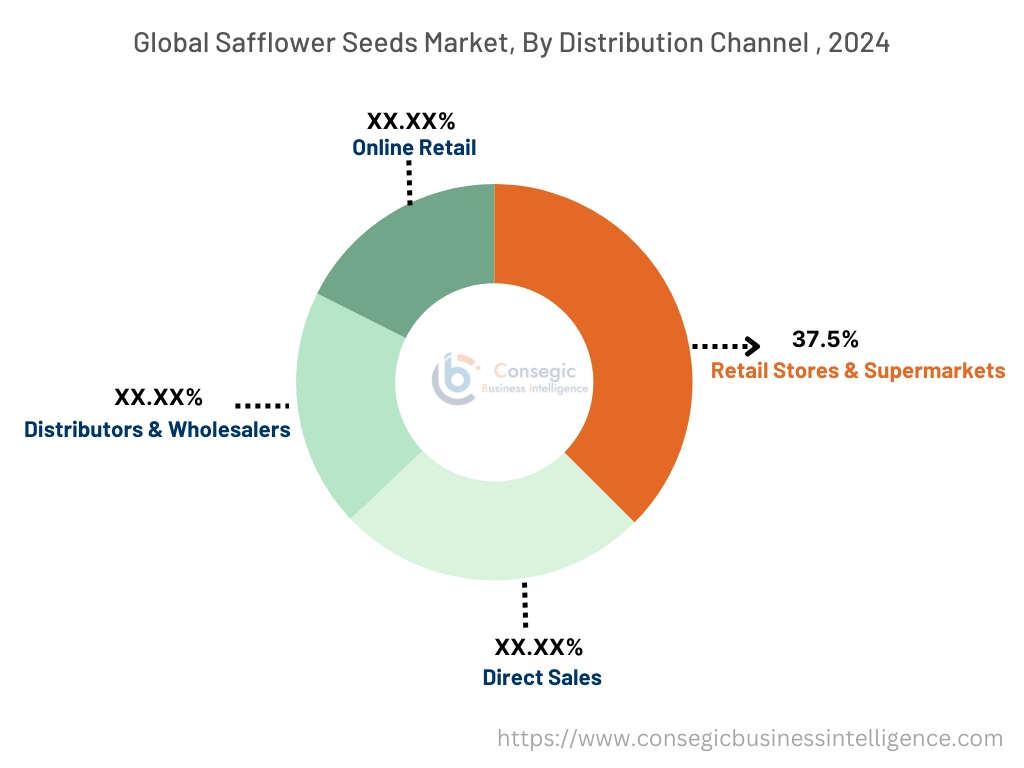
Based on distribution channel, the market is segmented into direct sales, retail stores & supermarkets, distributors & wholesalers, and online retail.
The retail stores & supermarkets segment held the largest revenue share of 37.5% in 2024.
- Supermarkets and specialty food stores remain the primary sales channels for safflower seeds and safflower oil.
- The need for packaged high-quality safflower products is increasing in health food stores and organic supermarkets.
- Market analysis suggests that in-store promotions and product sampling are driving consumer engagement in retail spaces.
- As per safflower seeds market trends, supermarkets are expanding their organic and specialty food sections, further boosting safflower product visibility.
The online retail segment is anticipated to achieve the fastest CAGR during the forecast period.
- E-commerce platforms are becoming a key distribution channel for safflower oil, seeds, and nutraceutical products.
- The need for direct-to-consumer sales and subscription-based organic products is growing, expanding the online retail segment.
- Segmental trends suggest that digital marketing, influencer endorsements, and personalized recommendations are driving online sales.
- Thus, with increasing digitalization in food and wellness retail, this segment is contributing to the safflower seeds market demand.
Regional Analysis:
The regions covered are North America, Europe, Asia Pacific, the Middle East and Africa, and Latin America.
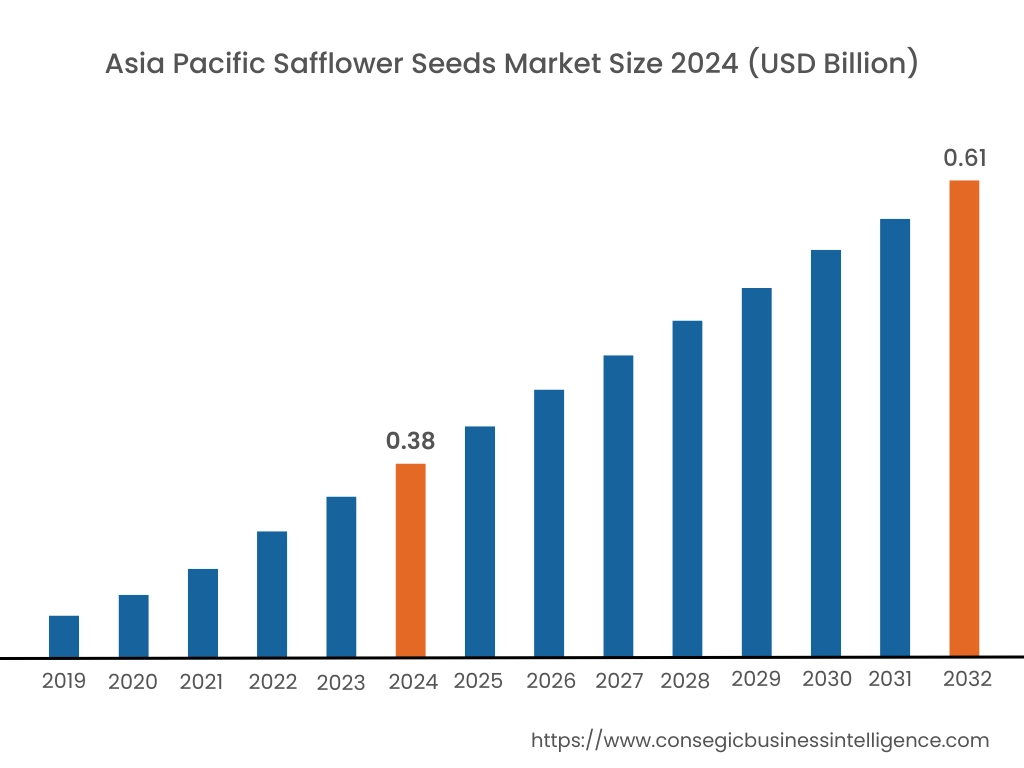
Asia Pacific region was valued at USD 0.38 Billion in 2024. Moreover, it is projected to grow by USD 0.40 Billion in 2025 and reach over USD 0.61 Billion by 2032. Out of this, China accounted for the maximum revenue share of 29.5%.
The Asia-Pacific region leads in safflower seed production and consumption, with countries like India and China at the forefront. In India, safflower is traditionally cultivated for its oil, which is utilized in cooking and Ayurvedic medicine. The growing health awareness among consumers has led to increased demand for safflower oil due to its beneficial fatty acid profile. In China, the seeds are used in traditional medicine and culinary applications, contributing to the region's dominance in the market.

North America is estimated to reach over USD 0.65 Billion by 2032 from a value of USD 0.43 Billion in 2024 and is projected to grow by USD 0.45 Billion in 2025.
North America holds a significant share of the safflower seeds market, driven by the food industry's need for healthier oil alternatives. The United States, in particular, has seen a rise in safflower cultivation to meet the needs of the edible oil market. Additionally, the seeds are used in bird feed and as a livestock feed supplement, further boosting their demand. The region's focus on sustainable and non-GMO crops presents a promising safflower seeds market opportunity for producers.
In Europe, the safflower seeds industry is expanding due to the increasing popularity of plant-based and natural products. Safflower oil's application in the cosmetics industry, owing to its moisturizing properties, has contributed to market growth. Countries like Germany and France are witnessing a surge in need for safflower-based products, aligning with the region's trend towards organic and clean-label products.
The Middle East and Africa region is emerging as a potential market, driven by the growing awareness of their health benefits and adaptability to arid climates. Safflower's drought-resistant nature makes it a suitable crop for these regions, offering farmers a viable alternative for crop diversification. The increasing use of safflower oil in traditional cuisines and its potential in biofuel production are expected to drive future requirements.
Latin America is gradually recognizing the value of safflower seeds, particularly in countries like Argentina and Brazil. The agricultural sector's interest in crop diversification and the search for sustainable oilseed crops have led to increased safflower cultivation. The region's favorable climate conditions and expanding food processing sector present opportunities for market growth.
Top Key Players and Market Share Insights:
The safflower seeds market is highly competitive with major players providing products and services to the national and international markets. Key players are adopting several strategies in research and development (R&D), product innovation, and end-user launches to hold a strong position in the global safflower seeds market. Key players in the safflower seeds industry include -
- Sakata Seed Corporation (Japan)
- Corteva Agriscience (USA)
- Safflower Technologies (India)
- Nuziveedu Seeds (India)
- Allseed (Ukraine)
- Syngenta AG (Switzerland)
- Mahyco (India)
- Bayer AG (Germany)
- BASF SE (Germany)
Safflower Seeds Market Report Insights :
| Report Attributes | Report Details |
| Study Timeline | 2019-2032 |
| Market Size in 2032 | USD 2.00 Billion |
| CAGR (2025-2032) | 5.6% |
| By Type |
|
| By Nature |
|
| By Application |
|
| By Distribution Channel |
|
| By Region |
|
| Key Players |
|
| North America | U.S. Canada Mexico |
| Europe | U.K. Germany France Spain Italy Russia Benelux Rest of Europe |
| APAC | China South Korea Japan India Australia ASEAN Rest of Asia-Pacific |
| Middle East and Africa | GCC Turkey South Africa Rest of MEA |
| LATAM | Brazil Argentina Chile Rest of LATAM |
| Report Coverage |
|
Key Questions Answered in the Report
How big is the Safflower Seeds Market? −
Safflower Seeds Market size is estimated to reach over USD 2.00 Billion by 2032 from a value of USD 1.30 Billion in 2024 and is projected to grow by USD 1.35 Billion in 2025, growing at a CAGR of 5.6% from 2025 to 2032.
What specific segmentation details are covered in the Safflower Seeds Market report? +
The Safflower Seeds market report includes specific segmentation details for type, nature, and application and distribution channel.
Which is the fastest-growing region in the Safflower Seeds Market? +
North America is the fastest-growing region in the Safflower Seeds market. These trends are encouraged by the food industry's demand for healthier oil alternatives.
Who are the major players in the Safflower Seeds Market? +
The key participants in the Safflower Seeds market are BASF SE (Germany), Sakata Seed Corporation (Japan), Corteva Agriscience (USA), Safflower Technologies (India), Nuziveedu Seeds (India), Allseed (Ukraine), Syngenta AG (Switzerland), Mahyco (India) and Bayer AG (Germany).
Overview
Reputation & Certifications


Our Services
- Market Intelligence & Forecasting
- Custom Research Solutions
- Market Entry Strategy
- Competitive Intelligence
- Customer Insights
- Industry Innovation Analysis
- Investment Advisory