Jump to Content
Industrial Enzymes Market - Size, Share, Industry Trends, and Forecasts (2025 - 2035)
Industrial Enzymes Market:
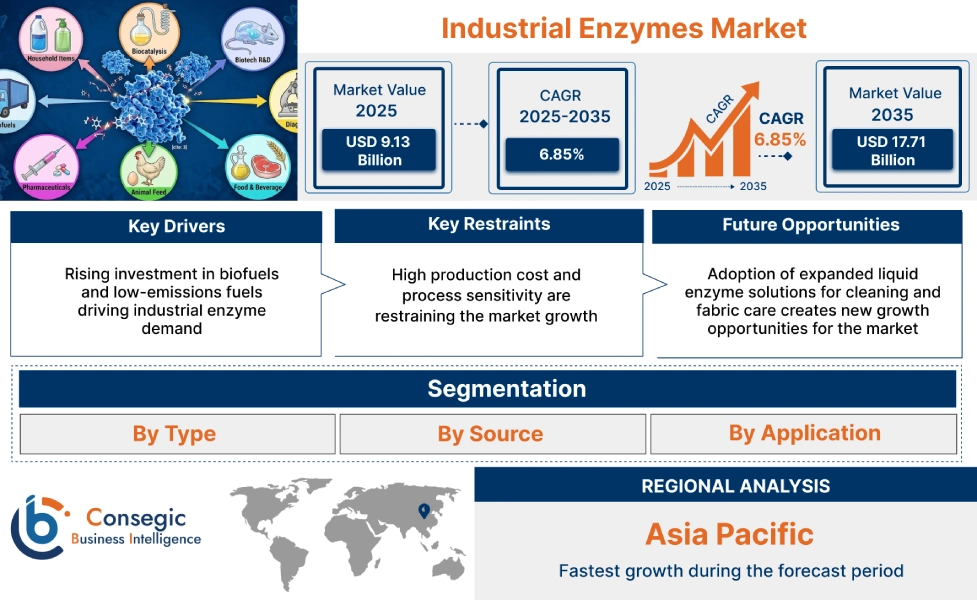
Industrial Enzymes Market size is estimated to reach over USD 17.71 Billion by 2035 from a value of USD 8.50 Billion in 2024 and is projected to grow by USD 9.13 Billion in 2025, growing at a CAGR of 6.85% from 2025 to 2035
Industrial Enzymes Market Scope & Overview:
Industrial enzymes are biological catalysts that can be used to speed up chemical reactions in various industrial applications. They are produced from microorganisms, plants, or animals and are used in applications such as the food and beverage industry, detergent industry, biofuel industry, pharmaceutical industry, textile industry, and paper industry.
The growth of the market is fueled by the increasing demand for sustainable and eco-friendly production processes. The increasing use of bio-based solutions in the food and biofuel industries is also contributing to the growth of the market. Improvements in enzyme engineering and biotechnology are also improving the performance of industrial enzymes.
How are Tariffs Impacting the Industrial Enzymes Market?
Tariffs on imported raw materials, microbial strains, and fermentation equipment have increased production costs for industrial enzyme manufacturers. Also, trade restrictions on biotechnology inputs and laboratory equipment have affected research and scale-up activities. Additionally, tariffs on cross-border enzyme exports have influenced pricing strategies and global competitiveness. In addition, the changing trade policies are also promoting regional manufacturing growth and local sourcing approaches, which is further altering the supply chain models in the industrial enzymes market.
Regional Analysis:
North America, Europe, Asia Pacific, the Middle East and Africa, and Latin America are the regions of coverage.
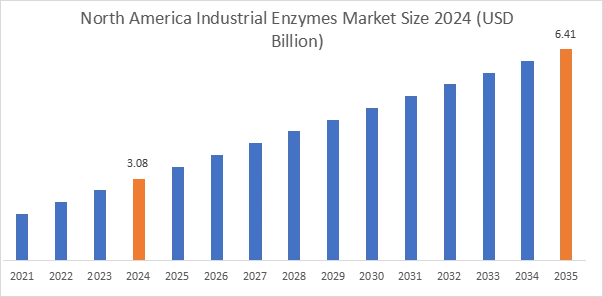
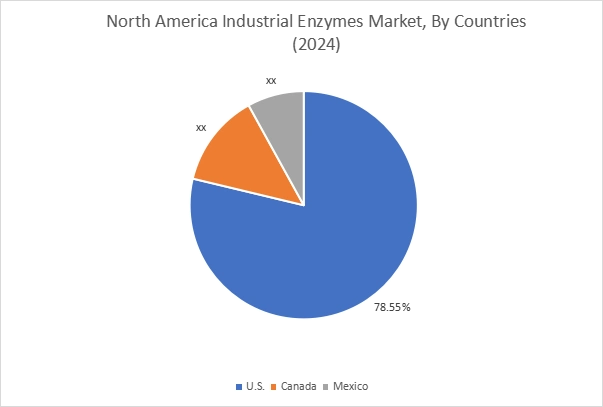
In 2024, North America accounted for the highest market share at 36.20% and was valued at USD 3.08 Billion, and is expected to reach USD 6.41 Billion by 2035. In North America, the U.S. accounted for the highest market share of 78.55% during the base year of 2024. North America industrial enzymes market growth is supported by biofuel blending mandates, packaged food demand, and pharmaceutical manufacturing activity in the United States and Canada. Ethanol production, enzyme-assisted food processing, and biotechnology research are increasing consumption of industrial enzyme formulations, thereby driving market growth.
- For instance, the S. Energy Information Administration reported in 2025 sustained ethanol production volumes in the U.S. Stable biofuel output in the region is increasing the demand for enzyme inputs used in starch-to-ethanol conversion processes.
In Asia Pacific, the Industrial Enzymes market is projected to witness the fastest growth over the forecast period. Asia Pacific industrial enzymes market growth is supported by expanding food processing, textile manufacturing, and biofuel production across China, India, and Southeast Asia. The growing demand for processed foods, starch conversion, and fabric treatment processes is fueling the consumption of carbohydrases, proteases, and lipases, thus propelling the market growth.
- For instance, according to the Food and Agriculture Organization (FAO, 2024), Asia is the largest region in global food consumption and processing output, supported by population growth and rising urbanization. Increased processed food production directly raises demand for carbohydrases and proteases used in baking, dairy, starch processing, and beverage clarification.
The growth of the industrial enzymes market in Europe is fueled by robust bio-based industry policies, detergent formulation norms, and sustainable manufacturing norms in Germany, France, Denmark, and the Netherlands. Manufacturers are integrating enzyme-based solutions to reduce chemical usage and energy consumption in cleaning, textile, and paper processing applications, thereby driving market growth.
Latin America industrial enzymes market growth is supported by expanding ethanol production and agricultural processing activity in Brazil and Argentina. Sugarcane-based biofuel manufacturing and food export operations are increasing utilization of fermentation and processing enzymes, thereby driving market growth.
Middle East & Africa industrial enzymes market growth is supported by food manufacturing expansion, detergent production, and water treatment applications in Saudi Arabia, UAE, and South Africa. Industrial diversification strategies are increasing demand for enzyme-based formulations in cleaning and processing industries, thereby driving market growth.
Industrial Enzymes Market Segmental Analysis:
By Type:
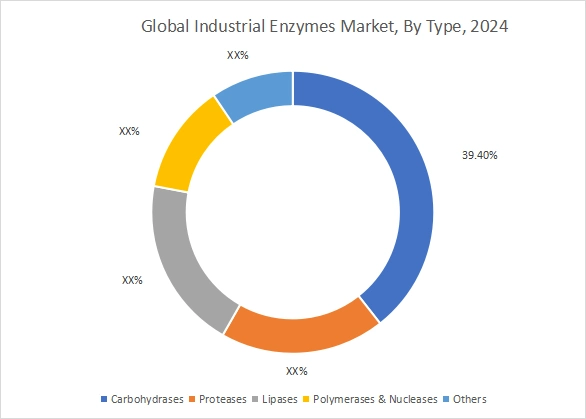
Based on type, the industrial enzymes market is segmented into carbohydrases, proteases, lipases, polymerases & nucleases, and others.
Trends in the Type:
- The rising demand for processed food and beverages is driving the use of carbohydrases and proteases.
- The growing use of bio-based products across industries is increasing the demand for industrial enzymes.
Carbohydrases accounted for the largest revenue share of 39.4% in the year 2024.
- Carbohydrases are widely used in food and beverage processing. They break down complex carbohydrates into simple sugars. This improves texture and production efficiency.
- Additionally, these enzymes are used in biofuel production. They convert starch into fermentable sugars.
- The rising demand for bakery and dairy products is supporting segment growth.
- Further, increasing bioethanol production is boosting the use of carbohydrases.
- Thus, as per the industrial enzymes market analysis, strong demand from food and biofuel industries is driving dominance of carbohydrases.
Proteases are anticipated to register the fastest CAGR during the forecast period.
- Proteases are used in detergents, pharmaceuticals, and food processing. They break down proteins into smaller peptides and amino acids.
- The growing demand for high-performance detergents is supporting segment growth.
- Additionally, increasing enzyme use in pharmaceutical manufacturing is driving adoption.
- Further, rising awareness about eco-friendly cleaning products is accelerating demand.
- Therefore, as per the market analysis, expanding applications in detergents and pharmaceuticals are expected to boost the proteases segment during the forecast period.
By Source:
Based on source, the industrial enzymes market is segmented into microorganisms, plants, and animals.
Trends in the Source:
- The growing need for an economical and high-yield process for enzyme production is fueling the adoption of microbial sources.
- The growing preference for sustainable and scalable production methods is supporting the use of microorganisms in enzyme manufacturing.
Microorganisms accounted for the largest revenue share in the year 2024.
- Microorganisms such as bacteria and fungi are widely used for large-scale enzyme production. They offer high efficiency and faster growth rates.
- These sources enable consistent enzyme quality and easier genetic modification. This improves production performance.
- In addition, microbial enzymes are compatible with a range of applications such as food, laundry, and biofuels.
- Further, lower production costs and ease of fermentation processes are supporting segment growth.
- Thus, as per the industrial enzymes market analysis, scalability and cost efficiency are driving dominance of microorganisms as a source.
Plants are anticipated to register the fastest CAGR during the forecast period.
- Plant-based enzymes are used in food processing and pharmaceutical applications. They are considered natural and safe.
- In addition, microbial enzymes are compatible with a range of applications such as food, laundry, and biofuels.
- The rising need for clean-label and plant-based products is supporting the growth of the market.
- Further, advancements in extraction technologies are improving yield and commercial viability.
- Therefore, as per the market analysis, growing demand for natural and plant-based ingredients is expected to boost the plant source segment during the forecast period.
By Application:
Based on application, the industrial enzymes market is segmented into food & beverages, detergents, biofuels, textile processing, pulp & paper, animal feed, pharmaceuticals, and others.
Trends in the Application:
- The growing demand for processed and convenience food products is fueling the use of enzymes in the food & beverages industry.
- The growing emphasis on sustainable and bio-based fuel production is propelling the adoption of enzymes in the biofuels industry.
Food & Beverages accounted for the largest revenue share in the year 2024.
- Industrial enzymes are widely used in baking, dairy, brewing, and juice processing. They improve taste, texture, and shelf life.
- These enzymes help in breaking down starch, proteins, and fats during food processing. This increases production efficiency.
- Additionally, the growing demand for functional and fortified food products is supporting segment growth.
- Further, increasing consumer preference for natural processing aids is boosting enzyme usage.
- Thus, as per the industrial enzymes market analysis, high demand from processed food production is driving dominance of the food & beverages segment.
Biofuels are anticipated to register the fastest CAGR during the forecast period.
- Enzymes are used in biofuel production to convert biomass into fermentable sugars. This improves ethanol yield.
- The growing need to reduce dependence on fossil fuels is supporting segment growth.
- Additionally, government support for renewable energy projects is driving enzyme demand in biofuel plants.
- Further, advancements in enzyme engineering are improving conversion efficiency and lowering production costs.
- Therefore, as per the market analysis, increasing focus on renewable energy and sustainable fuel production is expected to boost the biofuels segment during the forecast period.
Industrial Enzymes Market Dynamics - (DRO):
Key Drivers:
Rising investment in biofuels and low-emissions fuels driving industrial enzyme demand
The industrial enzymes market is growing due to the rising global investments in biofuels and low-emission fuels. Enzymes are an essential component in the production of bioethanol and biodiesel as they enhance the efficiency of the process and lower the costs of production. As governments and energy companies increase the production of bio-based fuels to achieve decarbonization goals, the demand for industrial enzymes rises.
Policy support, blending mandates, and energy transition strategies are accelerating capital allocation toward bio-based fuel infrastructure. Higher production capacity for biofuels directly raises the requirement for specialized enzymes used in starch breakdown, saccharification, and biomass conversion processes.
- For example, the International Energy Agency reported in its World Energy Investment 2025 report that investment in liquid biofuels, biogases, and low-emissions hydrogen is set to rise by 30% in 2025 to USD 25 billion.
Therefore, increasing global investment in bio-based fuel production is driving demand for industrial enzymes.
Key Restraints:
High production cost and process sensitivity are restraining the market growth
Industrial enzymes need to be produced under controlled conditions. Fermentation, purification, and stabilization steps raise the cost of production. Raw material price fluctuations also impact overall production expenses. This affects pricing for end users. Enzymes are sensitive to temperature and pH changes. Improper storage or handling reduces efficiency. This limits their use in certain industrial applications. Some industries hesitate due to performance variability under harsh conditions.
Therefore, high production cost and process sensitivity are restraining the industrial enzymes market expansion.
Future Opportunities:
Adoption of expanded liquid enzyme solutions for cleaning and fabric care creates new growth opportunities for the market
The growing demand for high-performance and sustainable cleaning products is creating new opportunities in the industrial enzymes market. Manufacturers of laundry and cleaning formulations are looking for enzyme solutions that work at low temperatures and deliver better stain removal and fabric care. Expanded enzyme portfolios help producers differentiate products and meet stricter performance and sustainability requirements.
- For example, in July 2025, BASF expanded its liquid enzyme portfolio for the laundry and cleaning industry by adding new enzyme types, including lipase, cellulase, and amylase to boost stain removal, care, and cleaning effectiveness.
Thus, the adoption of enhanced liquid enzyme solutions tailored for cleaning and fabric care applications is expected to strengthen product innovation and broaden application uptake, thereby promoting future opportunities in the industrial enzymes market during the forecast period.
Top Key Players & Market Share Insights:
The industrial enzymes market is highly competitive, with leading biotech and specialty chemical firms providing enzyme solutions to various end-use industries across the globe. The key players are employing various strategies in research and development, enzyme engineering, strategic collaborations, and product development to ensure a leading presence in the industrial enzymes market. The players are focusing on sustainable bioprocessing, high-performance enzyme formulations, and new applications in the pharmaceuticals, food and beverages, biofuels, and industrial processing sectors. The key players operating in the industrial enzymes market are:
- Novozymes A/S (Denmark)
- DuPont de Nemours, Inc. (U.S.)
- DSM-Firmenich (Netherlands)
- BASF SE (Germany)
- AB Enzymes (Germany)
- Advanced Enzyme Technologies Ltd. (India)
- Amano Enzyme Inc. (Japan)
- Hansen Holding A/S (Denmark)
- Kerry Group plc (Ireland)
- Associated British Foods plc (UK)
Recent Industry Developments:
- In January 2025, Codexis revealed groundbreaking enzymatic RNA ligation results to facilitate scalable and efficient production of RNAi therapeutics. This innovation showcases the potential of genetically engineered enzymes to enhance yield, facilitate synthesis, and enable the production of next-generation RNA-based drugs.
- In October 2025, BASF announced the extension of its enzyme and biotechnology expertise with a strategic partnership to promote sustainable and high-performance enzyme solutions. This move further enhances BASF’s expertise in industrial biotechnology and enables the adoption of enzyme-based technologies in various industries.
Industrial Enzymes Market Report Insights:
| Report Attributes | Report Details |
|---|---|
| Study Timeline | 2019-2035 |
| Market Size in 2035 (USD Billion) | USD 17.71 Billion |
| CAGR (2025-2035) | 6.85% |
| By Type |
|
| By Source |
|
| By Application |
|
| By Region |
|
| Key Players |
|
| Report Coverage |
|
Key Questions Answered in the Report
How big is the industrial enzymes market? −
The industrial enzymes market size is estimated to reach over USD 17.71 Billion by 2035 from a value of USD 8.50 Billion in 2024 and is projected to grow by USD 9.13 Billion in 2025, growing at a CAGR of 6.85% from 2025 to 2035.
Which segmentation details are covered in the industrial enzymes report? +
The industrial enzymes report includes specific segmentation details for type, source, application, and regions.
Which is the fastest segment anticipated to impact the market growth? +
In the industrial enzymes market, the proteases segment is anticipated to be the fastest-growing segment during the forecast period due to the growing demand for high-performance detergents.
Who are the major players in the industrial enzymes market? +
The key participants in the industrial enzymes marketare Novozymes A/S (Denmark), DuPont de Nemours, Inc. (U.S.), DSM-Firmenich (Netherlands), BASF SE (Germany), AB Enzymes (Germany), Advanced Enzyme Technologies Ltd. (India), Amano Enzyme Inc. (Japan), Chr. Hansen Holding A/S (Denmark), Kerry Group plc (Ireland), Associated British Foods plc (UK), and others.
What are the key trends in the industrial enzymes market? +
The industrial enzymes market is being shaped by several key trends including rising adoption of bio-based processing solutions, increasing demand for sustainable and energy-efficient manufacturing methods, advancements in enzyme engineering technologies, and growing application in renewable energy and waste reduction processes.
Overview
Reputation & Certifications


Our Services
- Market Intelligence & Forecasting
- Custom Research Solutions
- Market Entry Strategy
- Competitive Intelligence
- Customer Insights
- Industry Innovation Analysis
- Investment Advisory